
How to Prepare for a U.S. Tariff War That Affects Your Renovation
U.S. tariffs can increase Canadian renovation costs, particularly for lumber-heavy projects like decks, fences and home additions.
Tariffs, supply shortages and changing demand can affect lumber prices, contractor quotes and renovation budgets.
How US Tariffs Affect Lumber Prices
Canadian lumber has been caught in a U.S. trade dispute before. In 2017, the United States imposed countervailing and anti-dumping duties on certain Canadian softwood lumber products. The Government of Canada argued at the time that the duties would make homes, renovations and repairs more expensive.
Source: Government of Canada – Statement on U.S. Duties on Canadian Softwood Lumber
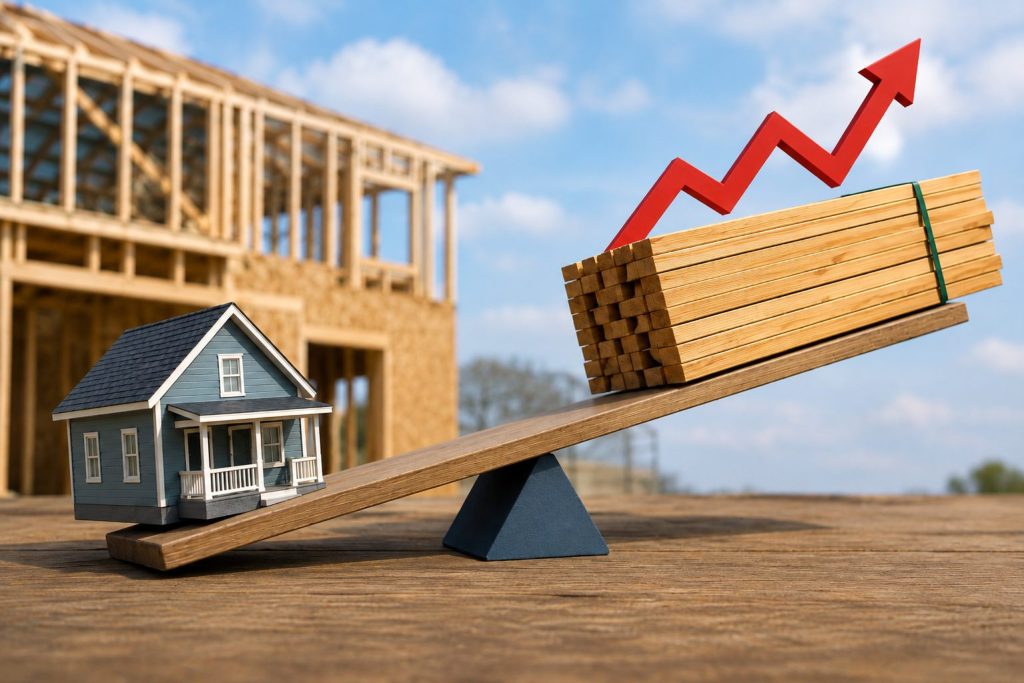
Canadian lumber prices subsequently rose substantially. Statistics Canada found that the average Canadian retail selling price for framing lumber was 34% higher in 2018 than in 2016. Wholesale framing-lumber prices increased 33% over the same period.
To be clear, the tariffs weren’t the only reason prices increased. Statistics Canada also pointed to growing U.S. housing demand, Canadian rail transportation constraints, wildfires and the mountain pine beetle.
So history doesn’t tell us that a new tariff will automatically cause lumber prices to rise 34% but it can contribute to lumber pricing pressure.
Source: Statistics Canada – Recent Trends in Wholesale and Retail Softwood Lumber Prices
How Tariffs Affect Renovation Costs

Statistics Canada reported in 2025 that projects requiring significant amounts of wood were experiencing higher prices, which it attributed largely to rising commodity prices and uncertainty surrounding tariffs on key construction materials.
More importantly, contractors reported tariff-related uncertainty and delayed schedules, while Statistics Canada said consumers were delaying major purchases, including renovations, amid the uncertain economic outlook.
Source: Statistics Canada – Residential Renovation Price Index
Not every renovation will be affected equally.
Projects that require substantial amounts of wood—such as additions, decks, fences—are more exposed to lumber-price movements. The more lumber your renovation requires, the more important lumber prices may become to your project’s final cost.
Trade disputes can also delay renovations as suppliers adjust their supply chains. Tariffs may affect other materials, including steel, aluminum, doors and windows. These cost pressures can also affect new-home construction, alongside the government measures discussed in Lower Ontario New Home Prices.
How Tariffs Affect Windows, Doors and Other Materials
Lumber isn’t the only material to watch. Windows, doors, steel and aluminum can also become more expensive when tariffs affect imported components or suppliers change their prices. The impact depends on where products and their parts are made, so ask contractors which materials are most exposed to price changes.
How to Track Lumber Prices

You don’t have to wait for lumber prices to rise – one indicator to watch is lumber futures. Futures prices represent market prices for lumber delivered in future contract months, so movements can provide an indication of what market participants are currently paying for future delivery. However, they aren’t a guarantee of what you will eventually pay.
Homeowners can also watch Statistics Canada’s producer and renovation price indexes and, importantly, announcements concerning new U.S. duties on Canadian lumber. For a separate look at how Canadian trade barriers affect access to construction materials, see Interprovincial Trade Barriers & Mortgages.
Statistics Canada – Industrial Product Price Index
Industrial product price index
If your renovation requires a lot of lumber, don’t rush to stock up. First, determine how much lumber prices could affect your budget.
Get estimates earlier, ask your contractor how much of the quote represents lumber and other materials, and find out how long the quoted material prices are guaranteed. You can also ask whether materials can be purchased or prices locked in earlier in the project.
Most importantly, budget for renovation surprises. A project that barely fits your budget today could become considerably harder to finance if major input costs increase.
How to Finance a Renovation

If you are planning to use your home equity to finance a renovation, consider building some extra room into your budget in case costs rise. Your loan-to-value ratio can affect how much equity you can borrow.
Ask your mortgage agent or lender whether you qualify for additional financing. Knowing your options before renovating can help you plan for higher costs.
If rising renovation costs mean you need to borrow more, the lender may reassess your income, existing debts, credit and available home equity. A higher renovation budget does not automatically mean you will qualify for a larger mortgage. Learn how the mortgage stress test and debt ratios affect qualification.
Renovate sooner or wait — If lumber prices will rise, starting the project sooner may help.
Decide how to access the equity — Compare a mortgage refinance, HELOC or second mortgage based on the amount needed, interest cost and how quickly the money will be used. See how mortgage refinancing works.
Confirm the resulting value of your renovation — If a $100,000 renovation becomes $125,000 will you still generate value (home equity) above and beyond the costs.
Maybe break your existing mortgage? — If refinancing your mortgage is a better option then an additional line of credit, consider breaking your existing mortgage. If you refinance you will need to calculate the prepayment penalty and compare it to a new mortgage with more capital and a different mortgage rate.
Before starting a renovation, compare contractor quotes, allow room for rising material costs and confirm your financing options. Planning ahead can help prevent unexpected expenses.