The Bank of Canada raised its key rate to 2.50% on October 28. If you have a variable-rate mortgage, could your payments now climb—and by how much?
In this article: Why rates rose · Variable mortgages · Payment example · HELOCs · What homeowners can do
October 28 update: Canada’s six largest banks announced that their standard Canadian-dollar prime rates are rising from 4.45% to 4.70%, effective October 29, 2026. The October 28 announcements came from RBC, TD, CIBC, BMO, Scotiabank and National Bank. Prime is a lender-set reference rate, not the Bank of Canada’s 2.50% policy rate or every borrower’s mortgage rate.
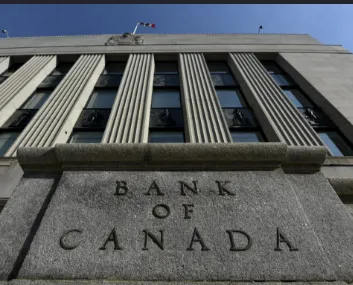
Why Did the Bank of Canada Raise Rates?
On October 28, 2026, the Bank of Canada increased its policy rate by 0.25 percentage points, from 2.25% to 2.50%. The Bank Rate is now 2.75% and the deposit rate is 2.45%. This was an actual decision, not a forecast. Read the official rate announcement.
The Bank said persistent energy prices and rising production and transportation costs are creating broader inflation risks. It reported that CPI inflation had been near 3% since April and projected inflation around 3.5% by the end of 2026, averaging 3% in 2027 before returning to 2% around mid-2028. These are Bank projections, not guaranteed outcomes.
The Bank also reported stronger-than-expected economic activity, while acknowledging trade uncertainty and a relatively weak housing outlook. Policymakers said further increases may be needed, but they will proceed carefully. The next scheduled rate decision is December 9, 2026.
Who Will Feel the Rate Increase First?
Homeowners with variable-rate mortgages and home equity lines of credit are most directly exposed. The Bank of Canada’s 2.50% overnight target is distinct from the banks’ 4.70% standard prime and your own contracted borrowing rate. Your rate generally follows the lender’s applicable reference rate plus or minus a contractual spread; the six banks’ standard-prime increase does not make every mortgage rate 4.70%.
One TD distinction matters: TD says its variable mortgages are tied to a separately named TD Mortgage Prime Rate. Its October 28 announcement confirms TD Prime Rate at 4.70% but does not confirm a new numerical TD Mortgage Prime Rate. TD mortgage borrowers should verify the applicable reference rate and contractual discount or premium with the bank.
For an adjustable-payment variable mortgage, a 0.25-percentage-point increase in the applicable reference rate generally raises the required payment, subject to the lender’s calculation and timing. With a fixed-payment variable mortgage, the scheduled payment may initially stay the same, but more goes to interest and less pays down principal. Trigger-rate or trigger-point provisions could require later action or payment changes, depending on the contract.

Existing fixed-rate mortgages generally keep their contracted interest rate until renewal. New fixed-rate mortgage offers are influenced more directly by bond yields and lender funding costs, so a quarter-point central-bank hike does not automatically mean every fixed-rate offer rises by a quarter-point.
What Could the Quarter-Point Increase Cost?
Assumption: You owe $500,000, have 25 years of amortization remaining, and your mortgage rate changes from an illustrative 4.50% to 4.75%. Using Canadian mortgage interest convention (nominal annual rates compounded semi-annually), a fully recalculated monthly payment would rise from about $2,767 to $2,837—approximately $70 more per month, or $840 over 12 months.
This is an illustration, not a quote. It assumes your lender passes through the full 0.25-percentage-point increase and recalculates payments over the remaining amortization. If your variable mortgage has fixed payments, the immediate cash payment may not increase, but interest costs can still rise.
What About Home Equity Lines of Credit?
Most HELOCs have variable rates tied to lender prime, often with a contractual premium. Where the applicable rate rises by 0.25 percentage points, an outstanding $100,000 balance would cost about $250 more per year in interest, or roughly $21 per month, assuming an unchanged balance and a full year at the higher rate. Interest is typically calculated daily, and the actual billing amount and minimum payment depend on your agreement and the October 29 effective date.
What Should Ontario Homeowners Do Now?
If you hold a variable mortgage, ask your lender when any prime-rate change takes effect, whether the required payment will change, and whether trigger provisions apply. Review the next statement rather than assuming the Bank’s decision translates into an identical change in your payment.
If renewal is approaching, compare the cost and flexibility of available fixed and variable mortgages. The Bank’s next decision is scheduled for December 9, but nobody can promise what it will be. Base your decision on your budget, contract terms and ability to handle more than one possible rate outcome.
Bottom line: The October 28 rate hike is now confirmed. What it costs you depends on your mortgage contract, your lender’s prime-rate decision and how your payments are structured.
Sources: Bank of Canada official announcement; October Monetary Policy Report (both October 28, 2026).