
Originally published August 12, 2026 · Updated October 21, 2026
Canada’s labour market added 75,000 jobs in July 2026, according to Statistics Canada. The unemployment rate fell to 6.4%, its lowest level since July 2024.
StatCan Report
Generally speaking, one would interpret this data as good economic news. More people are working and earning an income. Presumably, more people are in a position to qualify for a mortgage.
October 2026 Update: Stronger Business Confidence, But What About Inflation?
On October 19, 2026, the Bank of Canada reported improving business sentiment in its third-quarter survey, including a better outlook for sales and investment. However, much of the survey was completed before the latest deterioration in Canada–U.S. trade relations, and newer responses indicated that tariffs were putting pressure on costs and confidence. The findings highlight an important distinction: improving business expectations do not necessarily mean inflation concerns have disappeared.
Also on October 19, Statistics Canada reported annual inflation of 3.1% in September, up from 3.0% in August, largely because gasoline prices increased. Excluding gasoline, inflation actually eased to 2.2%. Why does this matter for mortgage rates? A stronger economy can increase demand and inflation pressures, but these latest figures also show why lenders and the Bank of Canada must distinguish broad inflation from temporary energy-price shocks. Fixed mortgage rates respond partly to bond yields and inflation expectations, while variable rates are more closely tied to the Bank’s policy rate.
So Why Aren’t Banks Responding by Lowering Their Mortgage Rates?
The Bank of Canada announed is most recent rate policy on Sep 2, 2026. You might reasonably assume that banks want to encourage more people to borrow if more Canadians can afford mortgages. Lowering rates could generate more customers for lenders.
Instead, the opposite sometimes happens. Strong employment numbers can put upward pressure on mortgage rates—or at least make it less likely that rates will fall. For a different regulatory scenario, read how Alberta separation could affect mortgage rules.
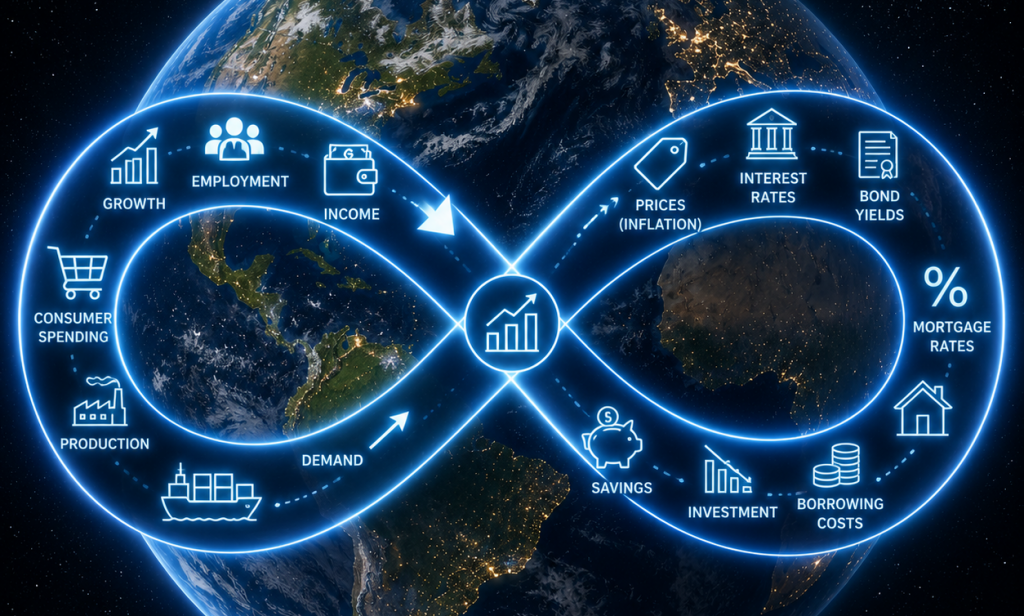
Economy – Inflation – Mortgage Rates
If you understand how inflation fears can push bond yields higher, which can then increase mortgage rates, you understand why it’s important to keep an eye on CPI readings.
For a more detailed discussion on this relationship and how it can be affected by geo-political factors, read more about Tariffs and Mortgages or my article on the Iran cxonflict and inflation, Geopolitical events can always have a short-term on the economy. But much of this is noise – like renaming Lake Ontario or Canadians trying to oust the US Ambassador
The other side of the economy–mortgage rate relationship is understanding how a strong economy can contribute to inflation. If more people are working and earning money, why would that cause prices to rise?
When employment is strong and incomes are rising, households generally have more money available to spend. That can increase demand for goods and services throughout the economy.
Increased demand doesn’t automatically cause inflation. The problem arises when demand grows faster than a business’ ability to supply the goods and services people want. When more money is competing for a limited supply of goods, businesses can raise prices. Improved Interprovincial trade relations might mitigate some inflation pressure on housing.
As bond investors track fear rising inflation, they sell bonds thus driving up bond-yields. Subsequently mortgage rates increase.

The Trade-Off
So a strong economy can give you a secure job and a higher income. Unfortunately, it can also bring higher prices. You may be earning more money than ever before, while watching much of that additional income disappear into the rising cost of living. Just look at renovation costs – if tariffs hit construction supplies, there goes your budget.
That is one of the trade-offs of a strong economy. It may not feel like you are moving forward as quickly as your income suggests. But if your income is increasing faster than your expenses, you are still left with more money, greater financial security and a stable job. US trade relations can always affect our economy. Higher mortgage rates driven partially by inflation are one drawback, but they should not erase the value of everything else a strong economy can provide.