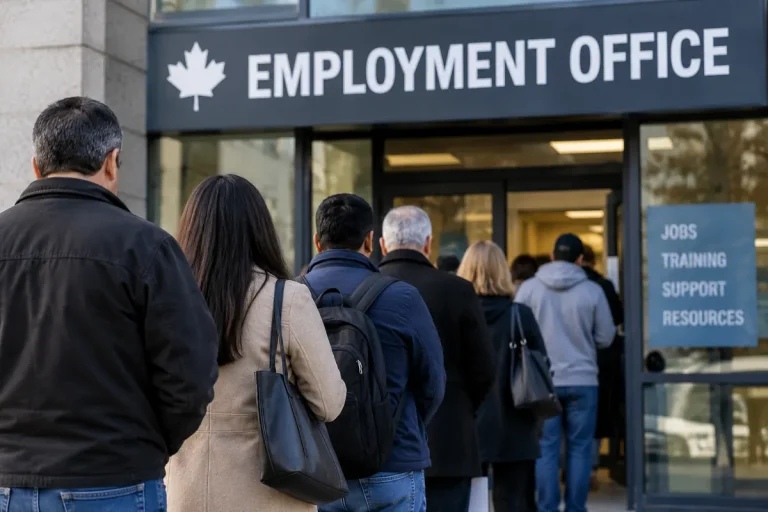
When savings are covering everyday bills, even an approved mortgage renewal can strain the household budget.
Table of Contents
What the Survey Found
Willful’s Great Delay 2026 survey, published November 2, found 47% used savings to cover everyday expenses in the previous year. Another 40% felt financially worse than a year earlier. Among its sandwich-generation subgroup, 25% cited rising renewals as an obstacle to financial goals, versus 15% overall.
The survey questioned 1,501 Canadian adults from September 1–10, 2026, through the Angus Reid Forum. These are self-reported answers, not mortgage arrears or default records. The report does not establish that mortgage renewals caused any particular household to withdraw savings, and Ontario-only findings were not provided.
Willful describes its “sandwich generation” as adults with a parent and child, but its charts and methodology use differing child-age definitions. That means the subgroup comparison needs caution. The broader finding is a warning about pressure on household budgets, not measured mortgage distress. Our article on job loss and mortgages explains another way a household budget can suddenly tighten.
Approved, But Can You Afford It?

Potentially. Lender approval and comfortable household affordability are different questions. An existing lender may offer a routine renewal without a fresh income application, while the homeowner is spending more on groceries, insurance, utilities or supporting relatives. A borrower can meet lending criteria and still have almost no monthly surplus. Our guide to the mortgage stress test explains what lenders measure—and what those calculations may miss.
Switching to a new lender normally involves a new approval decision. Some eligible uninsured straight switches between federally regulated lenders do not require the prescribed mortgage stress-test rate, provided the mortgage amount and remaining amortization do not increase. The OSFI straight-switch exemption guidance does not eliminate the lender’s obligation to assess repayment capacity. Approval remains conditional.
Can Renewal Payments Cause Problems?

A renewal can increase required payments if the new mortgage rate is higher than the old one, even when the borrower has never missed a payment. The practical measure is cash left after bills, not just the quoted mortgage rate. Consider all essential expenses, minimum debt payments and irregular costs before agreeing to a new term. Our article on variable-rate mortgage payments explores how changing rates affect borrowing costs.
The Financial Consumer Agency of Canada recommends shopping for options months before renewal. Its federal mortgage renewal guidance also explains that federally regulated lenders must send a renewal statement at least 21 days before the term ends. That minimum notice is not a planning deadline.
Does Longer Amortization Help?
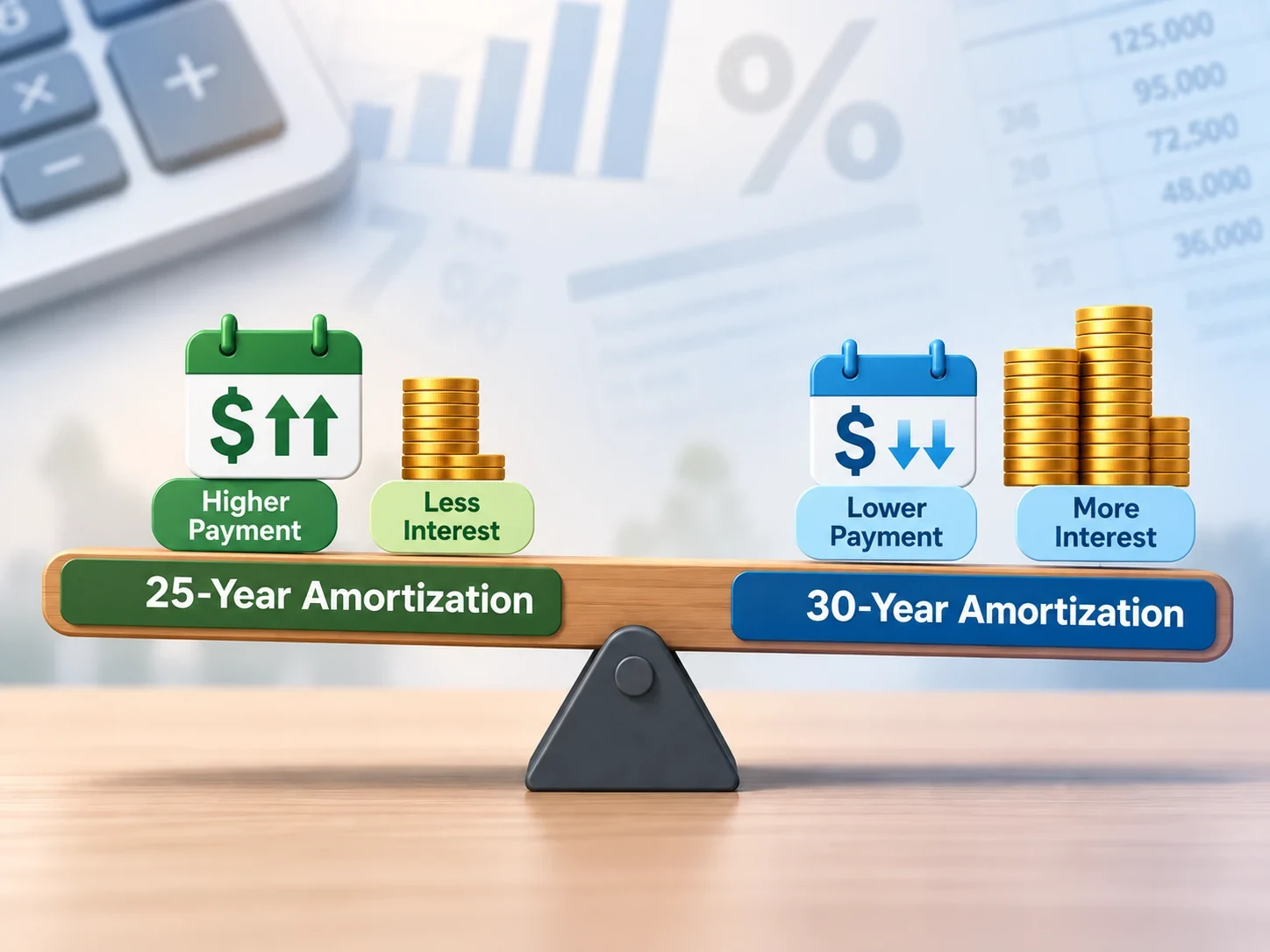
Extending the remaining amortization—the scheduled repayment period—can lower a household’s required monthly mortgage payment if the lender allows it. But repaying the principal more slowly usually means higher total interest over time. The extra interest and any qualification or insurance implications should be compared against the immediate monthly relief. See our comparison of 25- and 30-year amortizations for a closer look.
A longer amortization might buy time after a temporary income disruption, but it will not automatically resolve an ongoing budget shortfall. Borrowers should compare a smaller payment, the remaining mortgage balance and the total borrowing cost—not treat the smallest payment as the best solution.
What About Debt Consolidation?
For a homeowner carrying high-interest credit cards or personal loans, mortgage debt consolidation may reduce combined monthly payments if there is enough equity and the lender approves the refinance. However, refinancing also turns more debt into an obligation secured by the home, which raises the stakes if payments become unmanageable.
A lower rate does not guarantee a lower lifetime borrowing cost when short-term debt is spread across a mortgage. Compare total interest and fees, including legal costs and possible mortgage-break penalties, with the benefit of the reduced payment. See our explanation of refinancing for debt consolidation.
Why It’s Important to Protect Your Savings

Savings are meant to cushion unexpected expenses. Using them temporarily is not automatically a problem, but repeated withdrawals to buy groceries or pay utilities may signal a recurring deficit. Before making extra mortgage payments, consider whether you would have enough accessible emergency funds left to manage a repair or income interruption. Our article on renovating, selling or downsizing discusses choices that may arise when housing costs become difficult.
Assumption: A homeowner has enough cash to make an optional lump-sum prepayment but is unsure about future bills. In that case, protecting near-term liquidity may be more valuable than reducing mortgage principal immediately. That choice depends on income stability, debt rates, emergency reserves and mortgage terms.
What to Do Before Renewal

Review your mortgage several months ahead, estimate payments at competing rates and calculate your genuine monthly surplus after recurring and irregular expenses. Ask about switching, refinancing, changing amortization and any costs or restrictions before signing. Our guide to mortgage refinancing in Ontario covers another option to evaluate. If the mortgage is affordable only by draining savings, investigate that warning early.
If payments may become difficult, speak with your lender before missing one. The federal mortgage relief guidance describes possible support for borrowers facing exceptional financial difficulties; eligibility and available measures depend on the circumstances. Relief is not automatic.
The survey raises an important question, but it does not establish how many borrowers are in trouble. For a household facing renewal, approval alone is insufficient; maintaining enough money for life outside the mortgage is equally important.