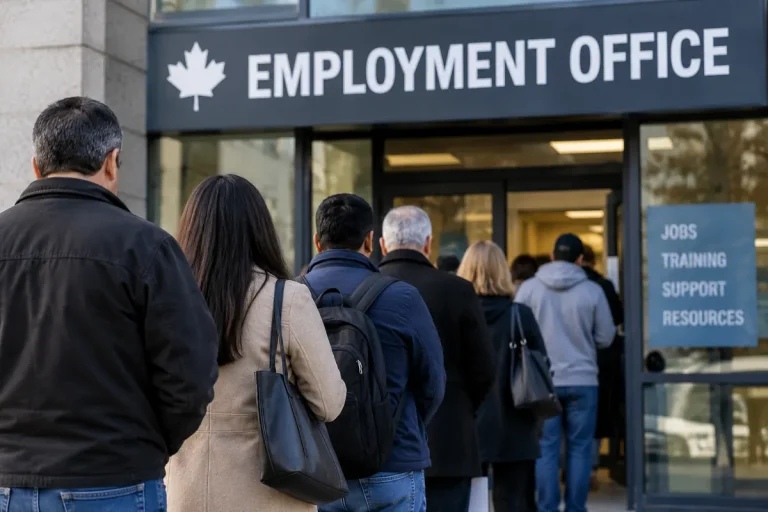
Under the proposal, lenders could compare claimed earnings with CRA records before approving a mortgage.
Why Ottawa Wants CRA Income Checks
The government’s central goal is to reduce income fraud in mortgage applications. A lender could check an applicant’s declared earnings against CRA-held information instead of relying solely on documents supplied by the applicant. The budget also identifies reliable, efficient applications as a goal.
Budget 2026 proposes changing the Canada Revenue Agency Act to authorize verification agreements with mortgage lenders and insurers. Ottawa proposes $13 million over three years beginning in 2027–28 to develop and pilot the service. Read the official federal budget income-verification proposal and its official income-verification impact assessment.
This is a proposal, not a launch. It does not mean every lender has CRA access or that borrowers can stop supplying documents.
Would Pay Stubs and Tax Returns Disappear?

Lenders may still ask for pay stubs, employment letters, notices of assessment and statements. A future CRA check could help confirm reported income, but Ottawa has not specified which document requirements would change.
Estimate your payment range.
For employees with stable salaries, verification could potentially reduce administrative back-and-forth. This is an inference, not a guaranteed processing-time saving.
Self-employed applicants may report taxable income that differs from their business cash flow. A CRA record does not, by itself, determine lender-accepted income or an approval amount.
A lender may still review tax returns, financial statements and income consistency. Read how banks analyze income to understand the difference between verified earnings and qualification.
Compare possible payments.
How Will This Reduce Fraud?
Assumption: An applicant might submit documents claiming $150,000 in income when CRA information supports only $80,000. That hypothetical mismatch could prompt a lender to investigate discrepancies before approving a mortgage. It would not prove fraud by itself.

Ottawa’s impact assessment says lenders and insurers would be the direct beneficiaries of better fraud detection and repayment-risk assessment. The proposal does not yet establish the exact verification process or information shared.
Income verification is separate from proving identity. Our article about digital ID and fraud addresses another potential security measure.
Would Mortgage Approval Become Easier?
CRA checks cannot ensure approval. Lenders assess debt, credit, down payment and property.

Affording payments differs from lender approval. Verification would not automatically raise borrowing limits.
Still undecided: launch timing, consent, privacy safeguards, lender/broker access and data-sharing.
Proposed funding starts in 2027–28 for a pilot, not nationwide access.
What Should Ontario Borrowers Do Now?
Organize current income records and fix document inconsistencies before applying. If your compensation changes or you work for yourself, discuss the lender’s documentation expectations early.
The practical goal is finding a lender whose rules fit your circumstances. A future CRA check might change how facts are confirmed, but affordability and approval remain different questions.
Keep documents accurate and watch for legislation and pilot details. Lender criteria still determine approval.