
Why should Ontario mortgage holders care about conflict happening thousands of miles away in Iran? As odd as it may seem, the effects of the Iran conflict could affect mortgage rates in Canada.
When conflict breaks out in a major oil-producing region like Iran, crude oil prices can rise quickly. Why is this important? Because higher oil prices can lead to higher inflation. We’ll discuss why rising inflation can affect Canadian mortgage rates later in this article.
For the moment, let’s discuss why conflict can affect oil prices.
October 2026 Update
The relationship described in this article is no longer theoretical. On September 2, 2026, the Bank of Canada said the continuing Middle East conflict was keeping energy prices high and increasing inflation risks. On October 12, Reuters reported Brent crude at about $106.80 per barrel as the continuing Middle East conflict and threats to regional energy supply kept markets on edge. Reuters oil-market update. That does not mean Canadian mortgage rates must rise, but it shows why energy prices and inflation remain relevant to mortgage-rate decisions. The Bank’s comments on Middle East energy prices also provide useful context for its September 2 interest-rate decision, when policymakers had to weigh inflation risks against broader economic conditions.
Table of Contents
- How the Iran Conflict Can Affect Oil Prices
- How Rising Oil Prices Can Affect Canadian Mortgage Rates
- How Inflation Can Push Canadian Bond Yields Higher
- How Inflation Can Affect Bank of Canada Interest Rates
- Why Banks May Raise Canadian Mortgage Rates
- Iran → Oil Prices → Inflation → Canadian Mortgage Rates
- How to Predict Canadian Mortgage Rate Movements
- Renew Your Mortgage Early or Wait?
- Fixed or Variable Mortgage?
- Conclusion
- Extra Reading
How the Iran Conflict Can Affect Oil Prices

Oil prices don’t just reflect what’s happening right now — they also reflect what traders think is going to happen. So if Iran, a major oil producer, gets caught up in a conflict, traders don’t necessarily wait to see whether oil actually stops flowing. They ask themselves simply: “How likely is this conflict to disrupt the supply of oil?” Inflation fears aren’t limited to rising oil prices. Even a strong economy can create inflationary pressure that pushes bond yields and mortgage rates higher, as explained in Why Mortgage Rates May Rise in a Strong Economy.
That anticipation alone can push oil prices higher because traders are reacting to the risk of a disruption, not just an actual disruption. Traders start buying oil now because they believe that if supply does decline later, oil prices could be even higher. That buying pressure alone can drive up the price of oil today.
How Rising Oil Prices Can Affect Canadian Mortgage Rates
To understand this relationship, you first need to understand what can cause a bank to raise its mortgage rates. There are many factors that go into a bank’s rate decisions, but two of the most common are related to:
A. Investors selling bonds, which causes bond yields to rise
B. The Bank of Canada raising its key interest rate
We’ll discuss each of these separately, but an important concept to understand is that both can be influenced by the same thing: inflation. Inflation isn’t the only reason borrowing costs can increase. Even when the economy is performing well, strong economic conditions can push mortgage rates higher.

How Inflation Can Push Canadian Bond Yields Higher
Oil isn’t just what goes into your gas tank. It’s a key input in shipping, plastics, fertilizer and countless manufactured goods. So when oil becomes more expensive, those higher costs can ripple through the economy, pushing up the prices of other goods and services — and that can increase inflation.
Bond investors fear inflation because a bond pays a fixed return. If inflation rises, it eats away at the purchasing power of that return. If your bond pays you the same $100 a year from now, but prices have gone up, that $100 no longer buys you as much as it would today.
Tariffs can cause another inflation concern.
If bond investors expect inflation to erode their returns, they may sell their existing bonds and move their money into investments that offer them a higher return. When investors sell bonds, bond prices fall and bond yields rise. Rising bond yields are one of the reasons banks may raise their mortgage rates.
How Inflation Can Affect Bank of Canada Interest Rates
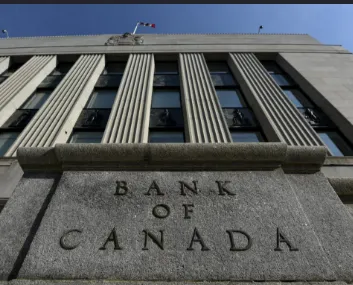
If higher energy prices threaten to keep inflation persistently above target or spread into other prices, the Bank of Canada may keep its policy rate higher or raise it. The Bank can also look through temporary energy-price spikes if it expects those pressures to fade. When the policy rate rises, variable mortgage rates and other short-term borrowing costs can move higher.
Persistent inflation can put upward pressure on both policy-rate expectations and bond yields, although the two do not always move together. When inflation creates uncertainty about future Bank of Canada decisions, borrowers may need to reconsider their mortgage strategies during uncertain interest-rate periods.
Why Banks May Raise Canadian Mortgage Rates
Banks pay customers interest to deposit money with them. Banks also charge interest to customers who want to borrow money. The basic business model is: a bank needs to charge borrowers more money than what it pays to savers who give the bank money.
Banks also fund mortgages by raising money in the bond market. If bond yields increase, the bank’s cost of funding those mortgages can increase. The bank may then pass some or all of that additional cost on to borrowers by raising mortgage rates.
When the Bank of Canada increases its key interest rate, short-term borrowing costs can also increase. This can ultimately lead banks to increase some of the interest rates they charge their customers. A higher mortgage rate doesn’t just mean a larger monthly payment. It can also affect how lenders calculate your GDS and TDS ratios when deciding how much you qualify to borrow.
Iran → Oil Prices → Inflation → Canadian Mortgage Rates

- Oil prices spike, pushing up the cost of manufactured goods and services across the economy.
This raises fears that inflation will increase. - Bond investors fear that inflation will erode their returns, so they sell bonds, pushing bond prices down and bond yields up.
- Trade Wars can challenge the Canadian economy
- The Bank of Canada may raise its key interest rate to fight inflation by slowing borrowing and consumer spending.
- As bond yields rise and the Bank of Canada raises its key interest rate, banks may respond by raising mortgage rates.
A conflict on the other side of the world, and suddenly your future mortgage rate can look very different.
So What?
Where does this discussion take us? For starters, it would help if we could predict where mortgage rates are headed. If we understand where inflation is going, we can get a better idea of what might happen to bond yields and future Bank of Canada rate decisions. Energy prices are only one piece of Canada’s economic outlook. Changes in international trade can also matter, which raises another question: could Canada’s trade surplus influence mortgage rates?
How to Predict Canadian Mortgage Rate Movements
There’s no single number you can look at that tells you where inflation, bond yields and ultimately mortgage rates are headed next. Bond yields and the Bank of Canada respond to a mix of economic signals, and looking at only one of these data points in isolation can be misleading.
Complementary indicators can help. It’s like predicting the weather — one gust of wind doesn’t tell you a storm is coming, but wind, dropping pressure and darkening skies together start to paint a picture.
For anyone with a mortgage renewal on the horizon — or someone getting a new mortgage to purchase a home — that’s the real value of watching these indicators. You’re not trying to predict the exact mortgage rate you’ll get. You’re trying to access enough information to make an educated prediction about whether mortgage rates are more likely to rise or fall.
For buyers, the challenge isn’t simply predicting interest rates. It’s also deciding when to enter the housing market when both borrowing costs and property prices are uncertain. If you’re about to renew your mortgage, you’re probably asking yourself two questions.
One: Should I renew early or wait until the natural end of my mortgage term?
Two: When I renew, should I choose a fixed rate or a variable rate?
Renew Your Mortgage Early or Wait?

If you prefer fixed rates and you think mortgage rates are going to rise, then you may want to consider renewing your mortgage early. This strategy allows you to lock in a rate today instead of waiting until the natural end of your mortgage term, when rates could potentially be higher. Renewal can also be an opportunity to reconsider your borrowing arrangement, particularly if you have built up equity and are considering refinancing your existing mortgage rather than simply renewing it.
If you prefer variable rates, you may decide to wait until your renewal date so you can see where rates actually go. A rising-rate environment can have a negative impact on your cash flow with a variable-rate mortgage.
Fixed or Variable Mortgage?
The decision between a fixed and variable mortgage depends on much of the same data, but the two rate types respond differently. Variable mortgage rates are more directly affected by Bank of Canada policy-rate changes, while fixed rates are influenced more by bond yields and lender funding costs. If you expect policy-rate cuts, a variable mortgage may benefit; if you expect bond yields to fall, fixed rates offered later may also become more attractive. The right choice still depends on your budget, risk tolerance, penalties and time horizon. Your interest rate isn’t the only factor determining your monthly mortgage payment. Choosing between a 25-year and 30-year amortization can also change your payment amount and total interest costs.
Conclusion
The Iran conflict may be thousands of miles away, but its economic impact can eventually affect mortgage rates in Canada. Understanding how oil prices, inflation, bond yields and Bank of Canada decisions are connected can help you make better decisions about when to renew your mortgage and whether to choose a fixed or variable rate.
Even if the Canadian economy continues to grow, mortgage rates can still rise.
You may not be able to predict exactly where mortgage rates are going, but understanding what is driving them can help you make a more informed decision about what to do next.
About the author: Jason Wodlinger is an Ontario Mortgage Agent Level 2. This article explains how geopolitical and economic developments can affect mortgage markets; it does not predict or guarantee future mortgage-rate movements.
Extra Reading
If you are interested in researching some of the economic data discussed in this article, here are some sources: