
Daily Hive recently reported that someone in Ontario is sitting on a $40 million unclaimed LOTTO MAX ticket.
If this individual can find their lottery ticket, can they use these winnings for their mortgage?
Table of Contents
Lottery Winnings as Down Payment
Yes, lottery winnings can potentially become part or all of the money you use toward a home purchase once the prize has actually been received and properly documented. That can make an enormous difference.
The federal government explains that the size of your down payment determines how much of the purchase price needs to be financed. A borrower putting less than 20% down will also normally require mortgage default insurance.
So someone who suddenly has $200,000, $500,000 or $1 million available can reduce the size of the mortgage dramatically. This also changes the property’s loan-to-value ratio because the more money you put down, the less the lender has to advance against the property.

Lottery Winnings = Income?
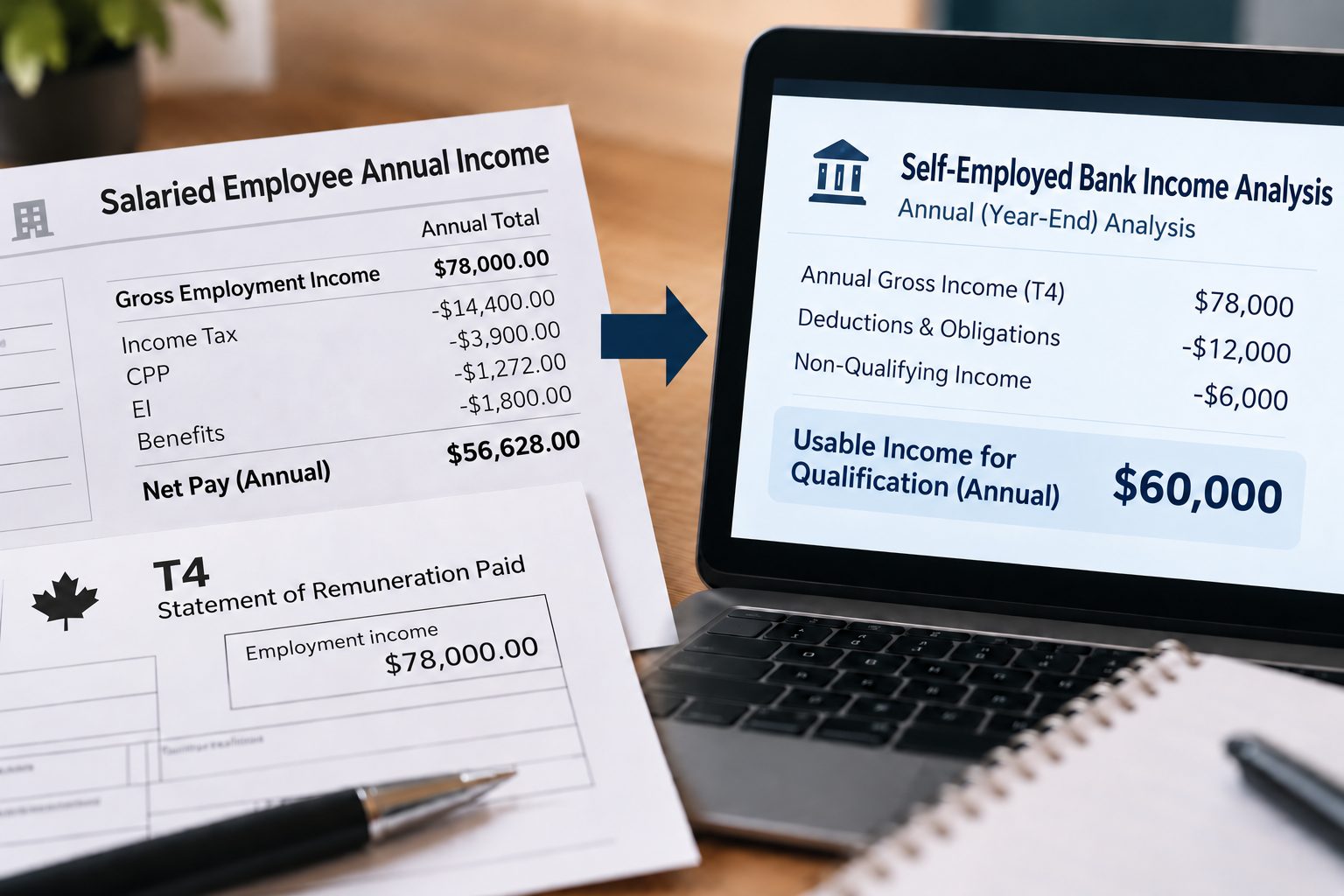
Winning $500,000 does not automatically mean the lender treats you as earning $500,000 a year.
Mortgage lenders are trying to determine whether you can continue making the mortgage payments. The Office of the Superintendent of Financial Institutions (OSFI), Canada’s federal regulator for banks and other federally regulated financial institutions, requires lenders to rigorously verify income and consider its history and stability. Even temporarily high employment income such as irregular bonuses may need to be normalized or discounted. A lottery jackpot is even more clearly a one-time event rather than an ongoing salary.
The mortgage issue is not simply whether the money is taxable; the lender wants to know how the mortgage will be repaid every month. That is why income matters so much in the mortgage process, as explained in my article on salary versus house price.

Can Lottery Winnings Help You Qualify?
Some lenders have high-net-worth or asset-based mortgage programs designed for people who have substantial liquid assets but do not fit ordinary income-based mortgage qualification. These programs vary by lender, but a common approach is to require strong credit, a sufficiently high amount of verifiable liquid assets and a meaningful down payment, then use those assets to support borrowing beyond what income alone would allow.
For example, one current bank program requires at least $250,000 in liquid assets and $1 in liquid assets for each $1 of mortgage needed above the amount supported by normal income qualification.
While another current lender program scales required liquid assets to 25% or 50% of the mortgage depending on the loan-to-value ratio.
Lenders will still assess the complete application, including credit, debts, down payment, property, LTV, liquidity, reported income, and the source and history of the assets.
Document Where the Money Came From
Imagine your bank statements normally show a few thousand dollars and suddenly there is a $500,000 deposit. Expect questions. Lenders commonly request recent bank or investment statements to confirm that borrowers actually have their down payment and closing funds.
In the case of lottery winnings, the borrower should therefore expect to document the prize and the movement of the funds into their account. That is not necessarily a problem because a legitimate lottery prize has a clearly identifiable source, and OLG conducts a review process before determining the rightful owner of a winning ticket.
Does the Stress Test Still Apply?
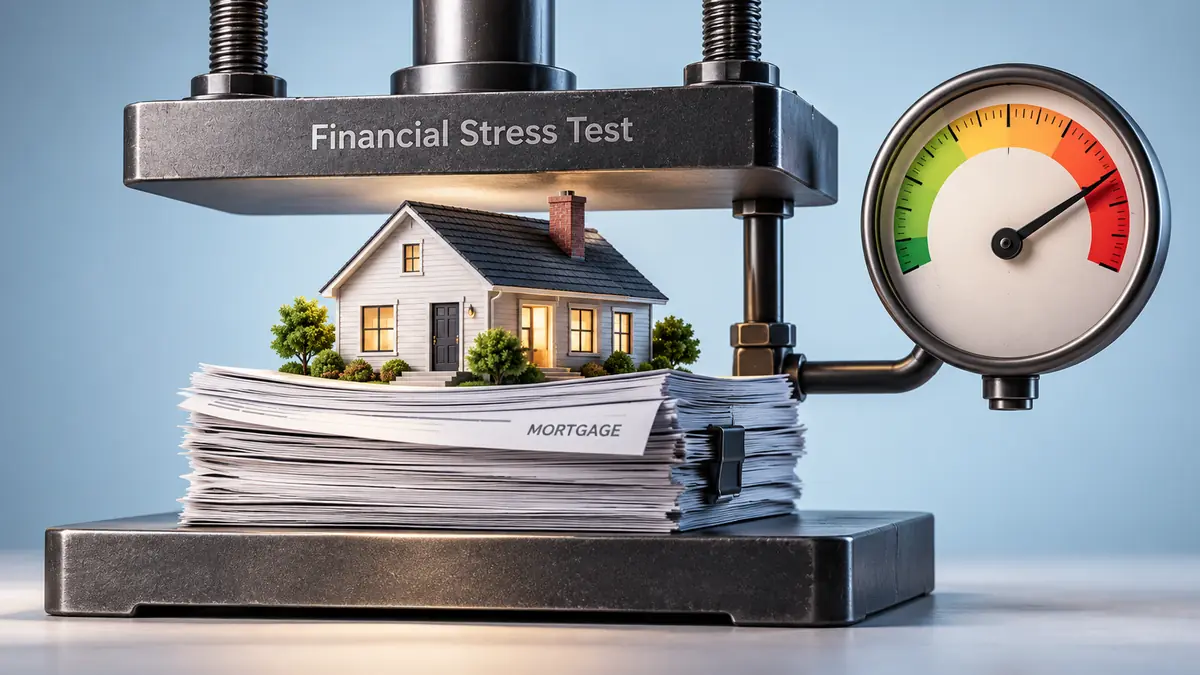
A large down payment does not remove the need to qualify under the mortgage stress test. My article on how mortgage stress tests work explains how lenders assess whether borrowers can handle payments at a higher qualifying rate.
The smaller the mortgage becomes, the easier the qualifying payment may be. Lottery winnings can therefore have a significant impact even if the prize itself is not treated as ongoing income. If the winnings allow the buyer to put at least 20% down, the borrower also moves away from how high-ratio mortgages work. Those mortgages normally apply when the down payment is below 20%.
Why Not Buy the House Outright?

Even if your lottery winnings are large enough to buy a home entirely in cash, using every dollar for the purchase may not always be the best financial choice. A mortgage can preserve some liquidity. It can also allow you to diversify part of the winnings into other investments instead of concentrating so much of your wealth in one property. Investing your winnings can be a critical strategy for your future.
Remember, even though you have a lot of money now from the lottery and you may even have good income, if your credit score is bad, that will prohibit your approvability.
Leverage can be helpful. When it is used carefully, the amount of debt still needs to make sense relative to your ongoing income, your monthly obligations and your high-net-worth liquid assets.
The Practical Takeaway
The person holding Ontario’s missing $40 million ticket could obviously buy an extraordinary number of homes without requiring a mortgage at all. But the same principle matters for someone winning $50,000, $100,000 or $500,000.
A lottery win can increase your down payment and lower your mortgage amount. It can also reduce your LTV and potentially open the door to lenders or programs that look more closely at your overall net worth.
Remember, lottery winnings can also help you refinance your mortgage, not just purchase a new house.
Remember, a big lottery win can also help you consolidate your debt, which you may want to consider before changing your mortgage.
What it does not necessarily do is turn a one-time windfall into conventional qualifying income. Yes, it is theoretically possible to win the lottery and still have a lender require that you prove you can afford the mortgage.