You do not necessarily need a 20% down payment to buy a home. Many Canadians purchase a home with considerably less.
Table of Contents
What Is a High-Ratio Mortgage?
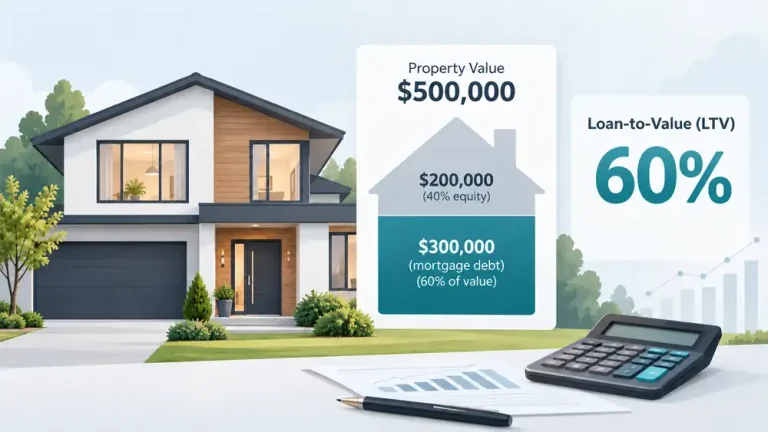
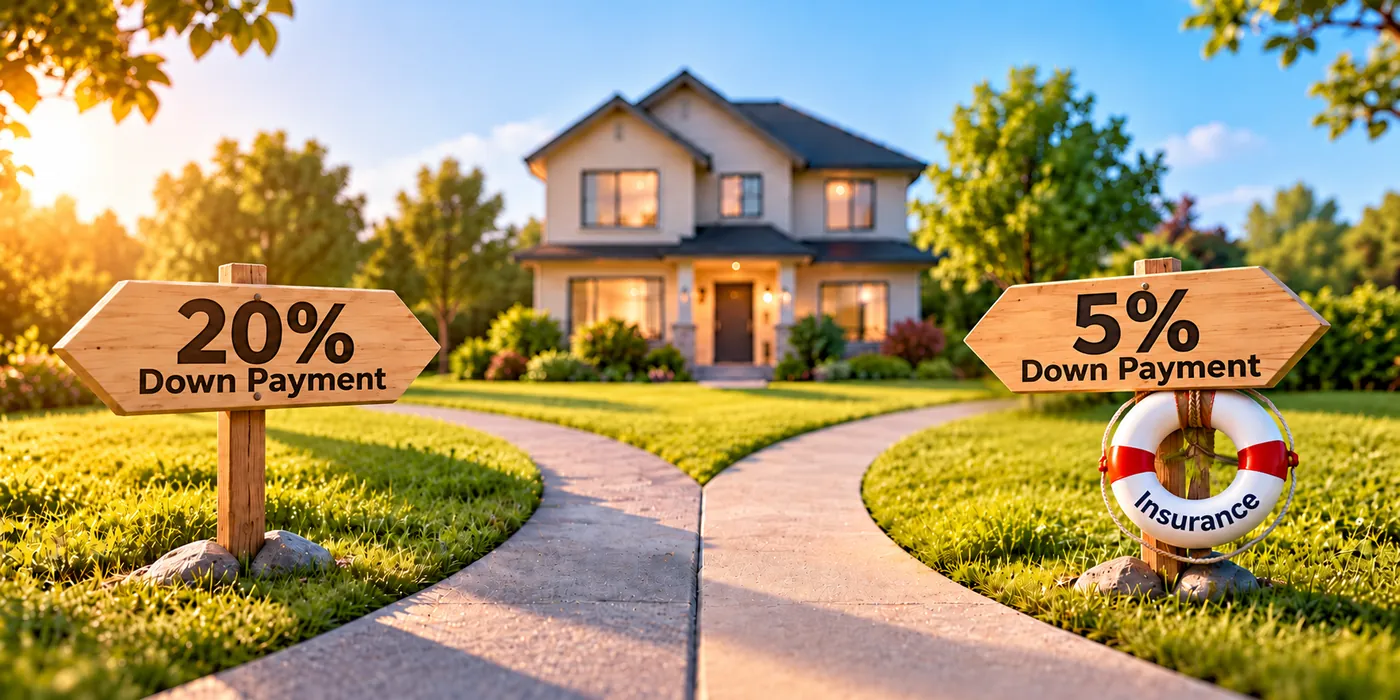
When your down payment is less than 20% of the purchase price, your mortgage will normally be considered a high-ratio mortgage and will require mortgage default insurance. In other words, you are borrowing more than 80% of the property’s value, which is reflected in your loan-to-value (LTV).
$600,000 home
Down payment = $60,000
Mortgage = $540,000
LTV = 90%
High-ratio mortgage
20% down or more: generally not high ratio.
Less than 20% down: mortgage default insurance is generally required.
How Much Do You Need for a Down Payment?
For an insured mortgage, the current minimum down payment is 5% on the first $500,000 of the purchase price and 10% on the portion above $500,000.
$700,000 home
5% of first $500,000 = $25,000
10% of remaining $200,000 = $20,000
Minimum down payment = $45,000
Mortgage insurance is currently available on eligible purchases below $1.5 million; at $1.5 million or more, the minimum down payment is generally 20%.

Why Is Mortgage Insurance Required?
This is probably the most misunderstood part: mortgage default insurance primarily protects the lender, not the homeowner. When you put less money down, the lender has less of an equity cushion if the mortgage goes into default, so the insurance reduces that risk.
You will sometimes hear people refer to this as “CMHC insurance,” but CMHC is not the only mortgage insurer in Canada. Sagen and Canada Guaranty also provide mortgage default insurance.
How Much Does Mortgage Insurance Cost?
The premium depends mainly on how much of the property’s value you are borrowing. For a standard insured mortgage with an amortization of 25 years or less, current CMHC premiums include:
| Loan-to-Value | Insurance Premium |
|---|---|
| 80.01%–85% | 2.80% |
| 85.01%–90% | 3.10% |
| 90.01%–95% | 4.00% |
The premium is calculated on the mortgage amount before the insurance premium is added, and it can normally be added to the mortgage rather than paid entirely out of pocket at closing. In Ontario, however, provincial sales tax on the mortgage-insurance premium cannot be added to the mortgage and must be paid separately.
Can a High-Ratio Mortgage Get a Lower Rate?
Yes. Because mortgage default insurance protects the lender, an insured mortgage can sometimes receive a lower rate than an uninsured mortgage. But the insurance premium is added to what you borrow, so your true borrowing cost is higher than the advertised rate alone suggests.
Sometimes the question is simply how much income you need for the home you want. I explain that in Salary vs House Prices.
$700,000 home
Advertised mortgage rate: 4.00%
Approx. cost after financed insurance: 4.38%
Difference: +0.38 percentage points
Illustration assumes a 4.00% rate over a 25-year amortization. The exact impact varies.

What About a 30-Year Amortization?
Most insured mortgages have traditionally been limited to a maximum 25-year amortization. Eligible insured borrowers can now obtain a 30-year amortization when at least one borrower qualifies as a first-time homebuyer or when the home is a newly built property.
A 30-year amortization lowers the required monthly payment by spreading repayment over a longer period, but you generally pay more interest over the life of the mortgage and an additional insurance premium may apply.
High-Ratio Mortgages Have More Rules

High-ratio mortgages come with an extra layer of insurer rules. These can affect credit, GDS/TDS ratios, property type, occupancy, income verification, down-payment sources and residency status.
Work-permit holders and self-employed borrowers may still qualify, but extra conditions can apply. Stated or low-documentation income may require a larger down payment, while some non-residents may not qualify for insured financing at all.
There can also be minimum credit standards, owner-occupancy requirements and lower maximum LTVs on some multi-unit properties. A borrower who qualifies conventionally with 20% down may not necessarily qualify for a high-ratio mortgage.
Should You Always Put 20% Down?
Not necessarily. If you have enough cash for 20% down but also carry a car loan, line of credit or credit-card debt, it can sometimes make more sense to put less down and use some of the remaining cash to eliminate or consolidate that debt.

Lower monthly debt payments can improve your TDS ratio and sometimes help qualification more than simply increasing the down payment. The trade-off is a larger mortgage and an insurance premium, so both options should be compared.
The Practical Takeaway
A high-ratio mortgage is not simply a mortgage for someone who “doesn’t have enough down payment.” It is a different financing structure: you put less money down, mortgage insurance is added, and you borrow more. In exchange, you may be able to purchase sooner and may have access to very competitive insured mortgage rates.
The useful question isn’t simply “Can I put 20% down?” It is “Given my income, savings, purchase price and plans for the next few years, how much should I put down?”
Quick Summary
| High ratio | Less than 20% down |
| Insurance | Required; protects the lender |
| Minimum down | 5% first $500K + 10% above |
| Maximum insured price | Below $1.5 million |
| Insurance premium | Up to 4% at 90.01%–95% LTV |
| Rate | Can be lower because lender risk is insured |
| 30-year amortization | Available to eligible first-time buyers and new builds |