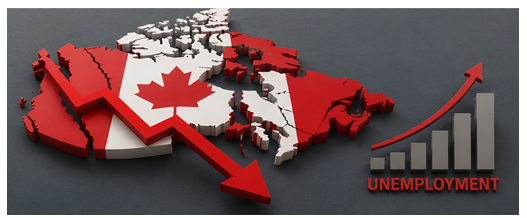
How can US trade negotiations affect the Canadian economy and your job?
And how does this affect your mortgage strategy?
Canada–U.S. trade negotiations aren’t just about tariffs and international politics. If negotiations deteriorate, tariffs, retaliation or an unfavourable trade agreement could hurt the Canadian economy. If the economy slows some businesses may eventually cut costs – or worse, jobs.
Scotiabank modeled an extreme scenario involving 25% U.S. tariffs and full Canadian retaliation which could result in:
- a 5.6% reduction in the Canadian GDP.
- unemployment increases by 3%
- the Canadian dollar weakens by 21%
- core inflation increases 4% higher.
The Bank of Canada separately modeled a broad trade war that could produce:
- a year-long recession
- average growth of about -1.2%
- permanently reducing Canada’s potential output and standard of living
Sources: Scotiabank Report / Bank of Canada Report
The Iran conflict isn’t helping much either when it comes to predicting the Canadian economy. Tariffs could also affect your debt costs.
Prepare While You Have a Job

This doesn’t mean you are going to lose your job. But if you believe your employment could be vulnerable it may make sense to examine your finances before anything happens.
The reason is simple: you may have more financial options while you are still employed. If employment income disappears these options could become more difficult to access.
Determine your monthly household costs. Separate essential expenses—your mortgage, property taxes, utilities, insurance, food and minimum debt payments—from expenses that could be reduced or eliminated.
Then compare those expenses with your available savings. If your employment income stopped tomorrow, would your savings cover one month of essential expenses? Three months? Six months? Knowing that number gives you a much clearer picture of your vulnerability to a job loss.
If you are considering relocating in Canada remember interprovicial trade barriers may create property financing opportunities.
Take a Close Look at Your Mortgage

It’s important to understand exactly how your mortgage is impacting your finances. Review your mortgage payment, interest rate, renewal date and remaining amortization. You should also know your prepayment privileges and what penalties might apply if you changed or refinanced the mortgage before maturity.
The objective isn’t necessarily to change your mortgage. but to understand your situation before you need to make decisions under financial pressure.
If you think that you might miss a mortgage payment should you lose your job, NOW is the time to take action.
If you think now is the time to downsize – keep an eye on home prices. Government initiatives may lower some Ontario house prices by $200,000.
Look at Your Other Debt
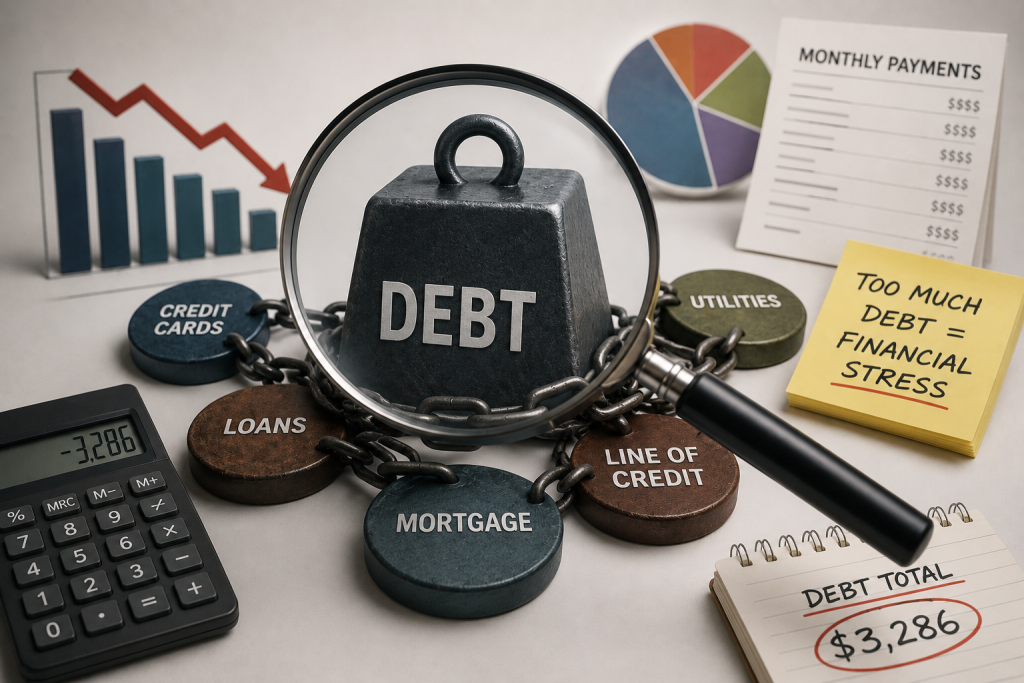
If you have significant unsecured debts (credit-cards, lines of credit), this may also be a time to examine whether those obligations could be reduced or restructured.
For a homeowner with sufficient equity, refinancing or debt consolidation could potentially reduce the amount of money required each month to service debt.
Moving high interest debt into a low interest mortgage increases cashflow and gives you some breathing room if you suffer a financial setback.
Find out what your financial situation would actually look like if you became unemployed. Could you qualify for Employment Insurance? What severance you might receive? What savings could you access? Do you have mortgage insurance or life insurance?
Protect Your Emergency Fund
Accessible savings are valuable during a period of unemployment. An emergency fund could allow you to continue paying your mortgage and other essential expenses while looking for another job without immediately turning to credit cards or additional borrowing.
If you’re concerned about your employment, building or protecting that financial cushion may therefore be more important than it was when your income felt secure.
Protect Your Credit Score

If your credit score is already low and you start missing mortgage or debt payments — your credit score could suffer even further. At that point, regardless of how much income you may have in the future, a low or bruised credit score can follow you for a long time. And as your credit score falls, it can become increasingly difficult to refinance your mortgage or access new capital when you need it.
Prepare for What You Can’t Predict
Nobody knows how Canada–U.S. trade negotiations will ultimately unfold, how much damage a prolonged trade dispute could cause or whose jobs might eventually be affected.
There is a lot of noise around trade talks – (renaming Lake Ontario?) Canadians are even taking their frustrations out on the US Ambassador. Even if the Canadian economy continues to grow, mortgage rates can still rise.
But you don’t have to predict the outcome to prepare for it.
If you believe your employment could be at risk, understanding your expenses, mortgage, debts, available benefits and emergency savings while you still have employment income could leave you with considerably more options if economic conditions deteriorate.

What You Can Do Now
- Review your budget and cut discretionary expenses if necessary—the goal is to free up cash for your mortgage payments.
- Contact your bank and ask about skip-a-payment options should you need them.
- Consider consolidating high-interest debt into your lower-interest mortgage.
- Think about refinancing to a 30-year amortization to improve cash flow—but remember that longer amortization periods increase your long-term borrowing costs.
- Check your credit score and monitor whether it is improving or declining.