Canadian reverse-mortgage debt has reached $10.9 billion. How can parents’ retirement equity also help their children’s first home?
According to an October 22 report from Canadian Mortgage Trends, reverse-mortgage balances reached $10.9 billion by mid-2026, citing OSFI figures. Lender representatives described both retirement cash-flow relief and helping adult children with down payments as uses for these products. The $10.9 billion is the overall outstanding balance, not the amount being gifted to children.
For perspective, outstanding Canadian reverse-mortgage balances were approximately $5.4 billion in February 2022, meaning they had roughly doubled by mid-2026. The 2022 figure was reported as a record at that time, and the 2026 balance is a historic high, although a complete month-by-month record comparison has not been independently verified. See the February 2022 OSFI-based comparison.
Table of Contents

Why Would Parents Borrow to Help Their Children?
Imagine a retired Ontario couple with a paid-off home worth $900,000. Their daughter needs another $100,000 to purchase her first home. The parents have substantial home equity but limited retirement income. One option to help the kids is a reverse mortgage, which could provide the funds without required regular principal or interest payments.
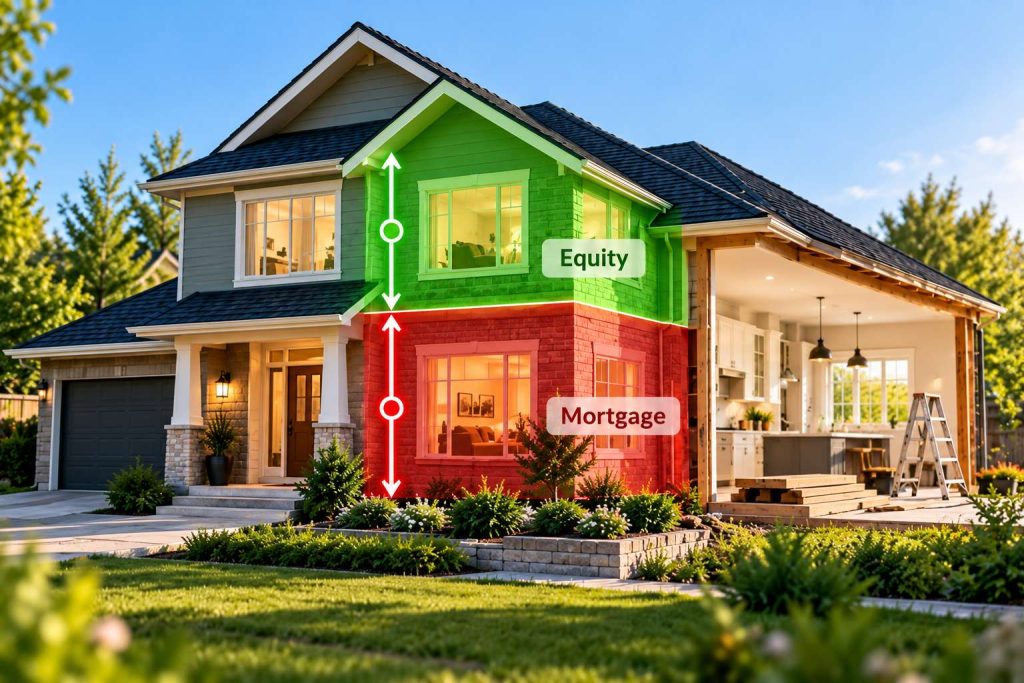
How Does a Reverse Mortgage Work?
A reverse mortgage generally allows eligible homeowners aged 55 or older to borrow against their home. The amount available depends on age, home value, location, existing secured debts and lender rules. The homeowner retains ownership and must meet conditions involving taxes, insurance and maintenance. The balance generally becomes payable upon a sale, death or another event specified in the mortgage agreement.
Reverse Mortgage, HELOC or Downsizing?
Reverse mortgage: Usually no mandatory monthly principal or interest payments, but the balance grows over time and borrowing costs may be higher.
Home equity line of credit (HELOC): Often lower interest rates and interest on funds drawn, but repayment obligations and income-based qualification can make it less practical for retirees.
Downsizing: Selling and buying a less expensive home can unlock equity without new debt, but transaction costs and the disruption of moving matter.
The cheapest choice today is not necessarily the least expensive over 15 or 20 years.

What Happens to the Children’s Inheritance?
The reverse-mortgage balance, including accumulated interest, would generally need to be repaid when the home is sold or another repayment event occurs. That can leave less equity for the estate, and borrowing to help one child could complicate the division of an inheritance between siblings.
Parents also need to consider future home care, long-term care or unexpected retirement costs. Equity already given away might no longer be available for those needs.
Five Questions to Ask Before Gifting Home Equity
- Can we afford retirement without this equity?
- How much might the debt grow over 5, 10 and 20 years?
- Can we qualify for a lower-cost financing option?
- What happens if one parent dies, enters care or must sell?
- Should our estate plan be revised to recognize the gift?
A first-time buyer’s lender may also require a gift letter confirming that the funds are non-repayable. The arrangement should be disclosed accurately.
Helping a child buy a home can be extraordinarily generous. But borrowing against a retirement property may create obligations lasting decades. Ontario families should review the costs, eligibility, long-term equity and estate consequences with qualified professionals before proceeding.