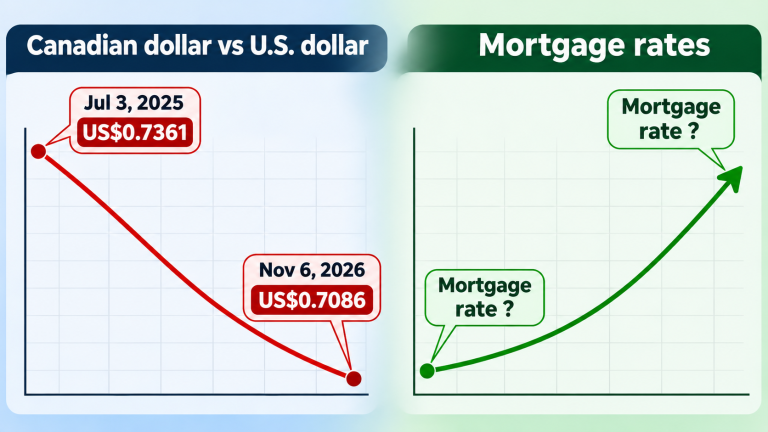
A homeowner planning a 2027 mortgage renewal could face a more expensive fixed-rate quote even if the Bank of Canada holds its policy rate steady.
What Did Moody’s Forecast?
In its November 6, 2026 Canadian housing outlook, Moody’s Analytics said demand for financing from governments and businesses building artificial intelligence infrastructure is pushing yields higher. It expects mortgage rates to follow, while assuming the Bank of Canada holds its overnight rate steady for much of 2027. See Moody’s November housing market outlook.
This is a forecast, not certainty. The report does not say exactly how much AI investment might raise Canadian fixed mortgage rates. It also expects the Ontario and Toronto housing recovery to lag some other regions.
How Does AI Spending Create Borrowing Pressure?

The AI build-out requires data centres, computer chips, cooling systems, electricity infrastructure and construction. Companies can pay for these capital-intensive projects with cash, equity or debt. Moody’s identifies the financing needs of these investments as an important source of pressure.
When corporations issue more debt, they compete for investors with governments and other borrowers. Investors might demand higher yields to lend, although strong bond demand could absorb additional borrowing. It’s possible that the scale of AI infrastructure borrowing could make fixed mortgage financing more expensive indirectly.
How Might This Reach Canadian Mortgages?
Global investors compare bonds issued in different countries, accounting for yields, currency changes and risk. Higher yields abroad could prompt demands for higher Canadian yields as well. But global bond markets do not move identically, and US AI borrowing does not directly set a Canadian mortgage rate.
Canadian fixed mortgages are priced partly against government bond yields and other lender funding costs. Those can change even without a change in the Bank’s overnight rate. The Bank of Canada mortgage explainer describes why a fixed rate is not tied solely to policy announcements.
Government borrowing adds another source of demand for investor capital. RBC Economics confirms that global financial conditions influence Canadian longer-term borrowing costs, although domestic factors also matter. Read RBC’s analysis of bond yields for the distinction.

What Does This Mean for Renewals?
A fixed mortgage generally retains its agreed rate until its term expires. Your exposure is the new rate offered when renewing, refinancing or taking out another mortgage. Breaking a term early can also involve penalties.
What Should Homeowners Watch?
Track Canadian five-year bond yields, actual fixed-rate offers and major corporate borrowing for AI infrastructure. Government financing needs are also relevant under Moody’s outlook. The Bank of Canada yield data is a useful starting point.
Moody’s forecast identifies a financing risk rather than establishing an inevitable rate increase. Fixed rates can move independently of the Bank of Canada’s overnight rate, but their 2027 direction remains unknown. Base renewal decisions on actual terms and household costs rather than a prediction.